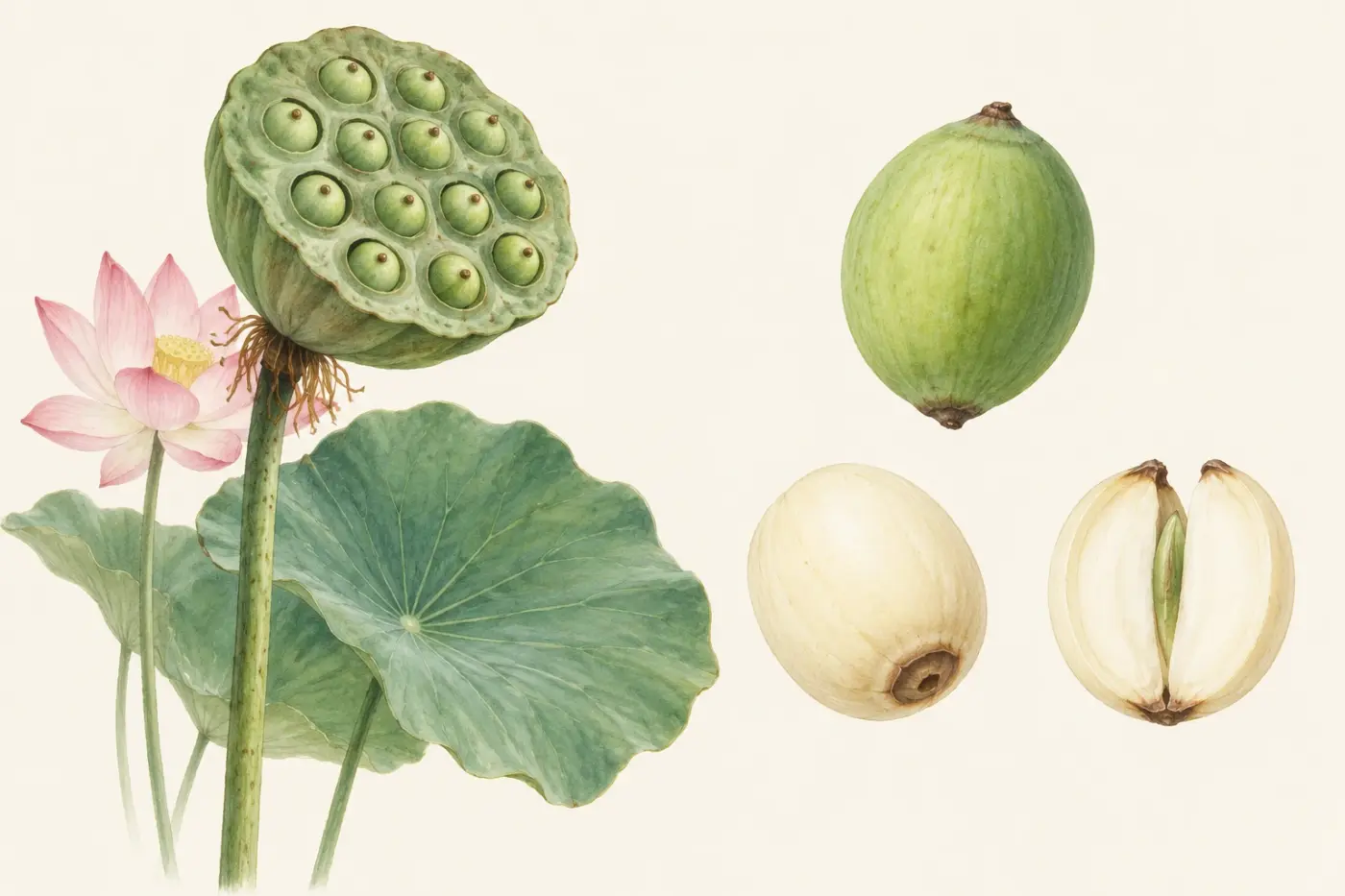
From the plant
The lotus is more than its flower. A seed develops inside the green pod. Knowing the part of a plant is the first step towards knowing the ingredient.
At the table
Lotus seeds belong to a food story: soups, porridges and sweet dishes. Their name, preparation and texture are part of what makes an ingredient useful.
In the tradition
China’s 2002 food-and-medicinal-materials list includes lotus seeds, Chinese yam and ginger. A shared ingredient can have different uses in the kitchen and in traditional practice.
The interesting question is how it is used.
The plant name alone does not tell the whole story. Which part is used? How is it prepared? Is the source describing a food tradition or a medical application? These questions reveal the knowledge behind a familiar ingredient.
Explore the sources
Source: China’s 2002 ingredient list
NCCIH: research on traditional Chinese medicine
An ingredient’s traditional status and evidence for treating a particular disease are different questions.
